Wall Tiles vs. Floor Tiles: Why You Can’t Always Use One For The Other
Picking a tile is about more than just the colour or pattern. It is really about where the tile will sit. A trip to a ceramic tile shop shows you plenty of styles, but how the tile performs matters just as much as how it looks. Walls and floors take different kinds of wear, humidity, and foot traffic. A tile that looks great on a bathroom wall might crack under the weight of kitchen traffic. Knowing the material’s properties saves you from replacing tiles later. The points below break down the main differences so you can match the right tile to the right surface.
What Determines Whether a Tile Belongs on a Wall or a Floor?
Start with the technical specs, not the look. Walls take little wear, but floors face constant foot traffic and heavy loads, so check the data first.
Water Absorption and Durability
Low water absorption makes tiles durable in wet zones, but that density limits tile thickness. You typically need an 8 mm profile for floors to spread the load evenly, whereas a 5 mm option works fine on vertical surfaces. This distinction is central when comparing wall tiles vs floor tiles for your layout.
Durability isn’t only about keeping out water. The body also needs to stand up to impacts, like a heavy object being dropped. Higher firing temperatures help the ceramic resist chipping. However, the same tile hardness that protects a floor can make a wall tile feel too rigid, particularly on flexible surfaces like plasterboard partitions.
Surface Finish and Slip Resistance
A polished glaze looks great but turns surprisingly slick. For better grip, stick to a matte or textured finish. This links to tile hardness. A harder tile holds its texture, so it doesn’t wear down to a dangerous shine when wet. Wall tiles, though, often look better with a smooth finish that reflects light.
Think about how much foot traffic the space sees. A busy hallway needs a tough finish that won’t scuff, while a decorative accent wall can handle something more delicate.
How to Evaluate a Tile Before Deciding Its Placement
Before asking Can you use wall tiles on the floor, check the specs. Not every tile handles floor stress the same way, so start with the manufacturer’s guidelines first.
Check the Manufacturer’s Specification Sheet
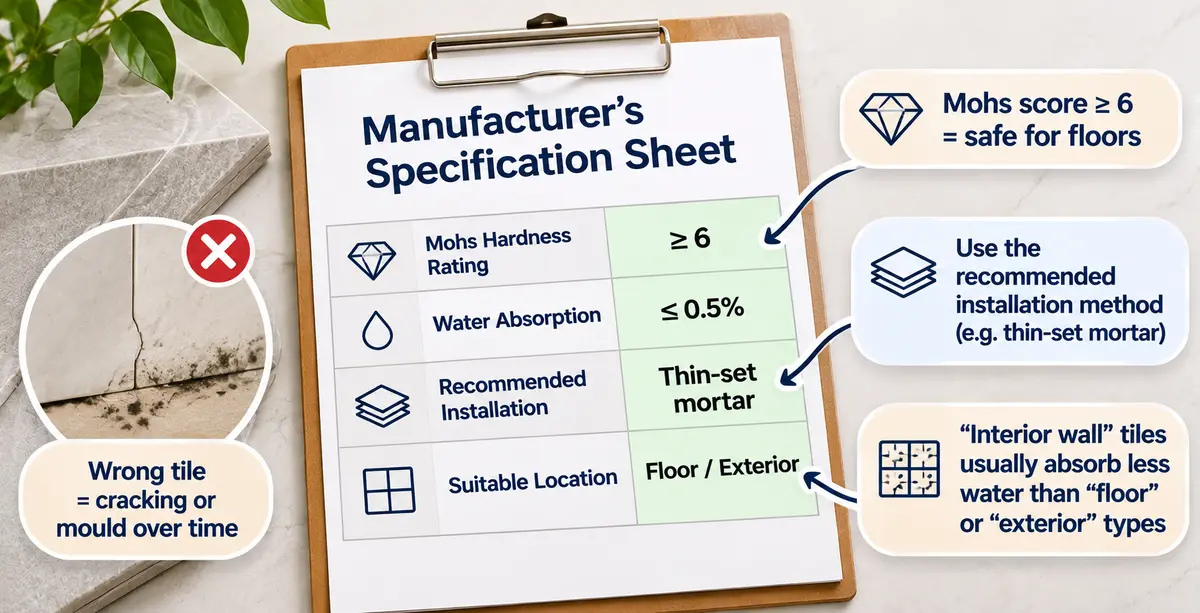
Check the manufacturer’s specification sheet for the hardness rating on the Mohs scale. A score of 6 or above tells you the tile is safe for floors, while lower values are usually meant for walls only. It also states the recommended installation method, like thin-set mortar instead of cement screed, which affects how the tile performs under load.
The spec sheet shows where the tile fits. “Interior wall” types usually absorb less water than “floor” or “exterior” ones. Using the wrong tile in the wrong place causes cracking or mould to build up behind it quickly.
Perform Simple On-Site Tests
- For floor use, the tile’s measured thickness should never be less than 6 mm.
- Press a fingernail on the surface; it should feel uniformly hard.
- The colour shouldn’t shift noticeably once you run the water test.
- Check the edge is smooth, with no jagged chips to catch on.
- Packaging must display a clear compliance mark for floor installation.
When the Same Tile Can Serve Both Roles
Some tiles work fine on walls and floors, but only if they meet specific physical standards. The table below lists the exact thresholds needed to make that dual-use switch safely and effectively.
| Property | Wall Tile Typical | Floor Tile Typical |
|---|---|---|
| Recommended Thickness | 5 mm – 7 mm | 8 mm – 12 mm |
| Typical Hardness (Mohs) | 5 – 6 | 6 – 7 |
| Water Absorption (%) | ≤ 3 % | ≤ 1 % |
| Slip Rating (R-value) | 0 – 0.5 | 0.5 – 1.0 |
| Installation Method | Thin-set mortar | Thin-set mortar or cement screed |
Examples of Versatile Tiles
Large-format porcelain tiles often hit both marks. Their dense structure offers a 6.5 hardness, while the standard 10 mm thickness handles floor loads. Spanish ceramic mosaics, too, work here. They feature low water absorption and a matte finish, suiting decorative bathroom floors as well as feature walls.
Boutique hotels often pick such tiles for their design continuity across surfaces. Choosing a product within the overlapping ranges in the table keeps the look cohesive. Designers don’t need to source separate wall and floor collections.
Limitations to Keep in Mind
Even tile has limits. Tile thickness stays decisive; a 6 mm sheet suits walls but struggles underfoot. Floor grout joints run wider than wall lines to handle movement, stopping the grout from cracking or wearing out quickly.
Finally, check the surface underneath. Plaster on a wall takes less weight than a concrete slab floor, so match the tile to the structure. Getting this wrong causes repairs later.
Practical Takeaways for Your Next Project
Budget and Aesthetic Balance
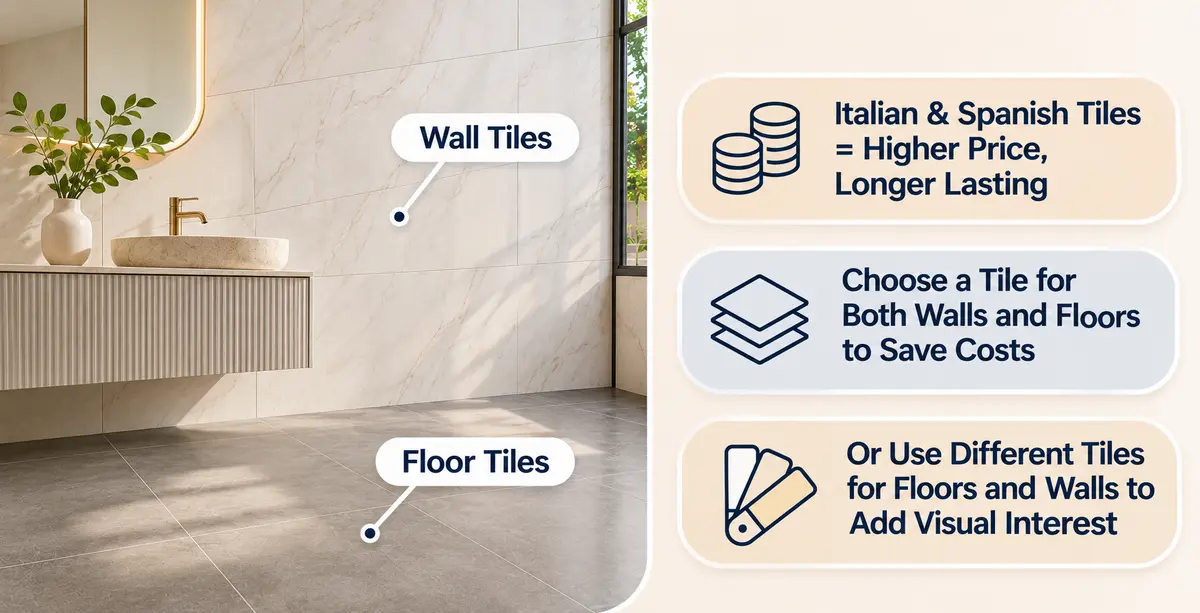
Italian and Spanish tiles carry a premium, though their durability often offsets higher maintenance costs. Picking a tile that suits both walls and floors cuts expenses. You can also budget for distinct floor and wall options to add visual interest without sacrificing performance.
Answering Common Queries
You might ask, “Can you use wall tiles on the floor?” after seeing a nice wall pattern. It depends on the thickness, hardness and rating you find. If those specs allow it, install them; otherwise, grab wall-only products.
So, you match the tile’s technical profile to the space’s demands. A trip to a local ceramic tile shop and checking the specs helps you decide. This makes picking the right tile a straightforward part of the design process, saving you from guessing what will actually hold up underfoot.
Choosing the Right Ceramic Tile Shop for Your Project
Recent Posts
- Wall Tiles vs. Floor Tiles: Why You Can’t Always Use One For The Other
- Bathroom Floor Tiles in Singapore: Slip Safety, Drainage, and Material Choice
- Tile Finishes Compared: Matte, Polished, Lappato, and Textured Tiles for Singapore Homes
- What Are Mosaic Tiles? Materials, Sizes, and Finishes Explained
- Glass Mosaic Tiles vs. Ceramic Mosaic Tiles: A Side-by-Side Comparison
Recent Comments
CATEGORIES
- Adhesive Application (1)
- Architecture (3)
- default-uncatogories (2)
- Exterior (3)
- Interior (18)
- List (1)
- Tiles Cutting & Drilling (7)
- Tiles Leveling System (1)
- Tiles Moving (3)
- Uncategorized (1)